
The technology question is settled. The operational ones are where 2026 gets interesting.
Two years ago, “AI agent” in most boardrooms still meant a chatbot with slightly longer memory. In 2026, it means a system that reads your live data, plans actions across multiple steps, calls your APIs, writes to your databases, and keeps running long after the demo ends. The technology question isn’t whether this works. It does. The interesting questions are now operational: how do you keep these systems stable in production, what kind of architecture survives a year of real use, and where does autonomy actually pay off versus where it just adds risk.
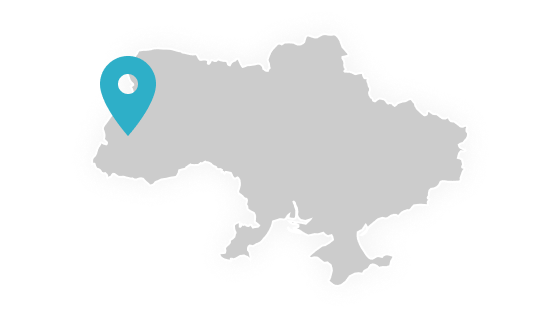
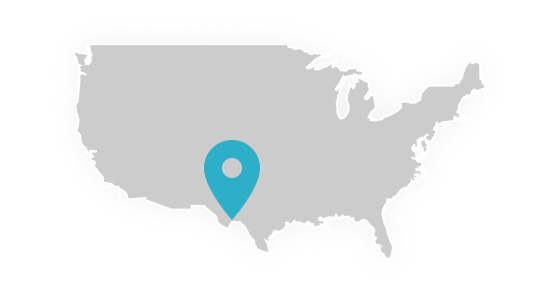
We’ve spent the last 18 months building autonomous-agent systems for clients in B2B services, travel, energy, and logistics. Two of those projects are the clearest illustration of how the work has changed.
Case one: replacing 70% of the bid team’s admin work
A European B2B services firm had a familiar problem. Their highest-value people – bid managers and pricing analysts – were spending around 70% of their time on the wrong work. Manually reading hundreds of pages of tender documents. Pulling out deadlines. Matching required certifications. Tracking which portals had what. By the time anyone was actually thinking about strategy or pricing, the deadline was usually closing in.
The system we built Multi-Agent AI for Tender Optimization is a four-agent setup. A scraping agent monitors tender portals and pulls down new documents. A parsing agent ingests the PDFs and breaks them into semantically meaningful chunks. An extraction agent identifies required documents, deadlines, and conditions. An analysis agent assembles the structured output. Each one runs as its own FastAPI microservice, with PostgreSQL holding state and OpenAI performing reasoning via LangChain. Docker for deployment, rate limits to keep things sane, and manual validation in the loop for the first phase.
What changed for the client wasn’t really speed. It was where their senior people spent their time.
Submission volume increased 4x because prep time shrank from days to minutes. Compliance accuracy went to near-100% because the agents don’t get bored or skim. And 70% of staff time that used to be spent on document inspection moved to pricing strategy and competitive positioning – work the AI doesn’t do and shouldn’t do.
That last part is the lesson. Production agent value rarely shows up as “AI replaces person.” It shows up as “AI clears the runway so the person can do the work you were actually paying them for.”
Case two: capturing revenue that used to evaporate overnight
The second case is a European travel agency selling last-minute deals and niche regional tours Automating Content Strategy for a Travel Agency. Their margin model only works if tours fill quickly. Filling tours quickly requires high-volume social content. Two marketers, working business hours, were getting 5-7 posts out per day when the business needed 15-20. Worse, the most urgent deals – the ones launched at 9 pm or over a weekend – were the ones with the most upside, and they got no promotion at all.
The system runs 24/7. A planner agent reads the tour management system, scores each tour on a priority signal (time to departure, seats left, margin), and builds a rolling fourteen-day plan across Instagram, Facebook, and X. A copy and asset agent writes channel-specific captions and pulls approved imagery from the asset library. A compliance guard checks brand voice, pricing, and disclaimers. A scheduler publishes through platform APIs, tags everything with UTMs, and feeds engagement data back into the planner.
Architecture-wise, this is a LangGraph orchestration with a Pinecone knowledge base, integrated with the client’s TMS via read-only, secure MCP servers. The first deployment phase kept a human in the loop for approval. Once we had enough clean cycles, we relaxed it.
Numbers we can share: content output went from 5-7 to 12-14 posts per day – a 200% increase without adding marketing headcount. Seat fill on promoted tours increased by 14%. The marketing team spends 58% less time on daily publishing, and most of that recovered capacity now goes into partnerships and creative direction. Again, the work humans should be doing.
The most interesting result isn’t in the numbers, though. It’s the 100% capture rate on urgent overnight deals. That was previously a revenue category the business knew it was losing and had simply accepted. Autonomy paid off in a place where adding people couldn’t.
What’s actually different about production in 2026
Both systems are doing things last year’s “AI agent” couldn’t reliably do – running unsupervised for long stretches, integrating with proprietary internal systems, and acting on live data. A few patterns from the work are worth naming out loud.
The orchestration layer matters more than the model. We use LangGraph for systems with branching decision logic and explicit state, lighter LangChain setups for sequential pipelines, and FastAPI microservices when agents need to scale independently. The choice isn’t aesthetic. Pick wrong, and you’ll spend the next six months fighting the framework.
Knowledge base design is where most projects quietly fail. Pinecone or another vector store is necessary but not sufficient. What we’ve learned is that the structure of what goes into the index – brand guidelines next to historical high-performers, product data with margin context attached, regulatory clauses tagged for retrieval – matters more than the embedding model. Garbage indexed is garbage retrieved faster.
Governance can’t be retrofitted. Read-only integrations to source-of-truth systems, schema validation on every agent output, least-privilege keys, audit trails, optional human-in-the-loop gates for the early phase of any deployment – these get designed in, or they don’t exist. We’ve never successfully bolted them on after the fact.
Monitoring is its own discipline. We call our internal practice AgentOps – observability, health checks, cost-aware scaling, governance. It looks a lot like DevOps, but the failure modes are different. A traditional service breaks loudly. An agent gets subtly worse: outputs that pass schema validation but drift off-brand, decisions that look fine in isolation but degrade aggregate performance. You only catch that with telemetry designed for it.
Where this leaves things
The interesting question for most companies in 2026 isn’t whether to build agents. It’s where in the business autonomy actually pays – and that’s a much shorter list than the hype suggests. Both cases above worked because the underlying process was high-frequency, document- or data-heavy, and time-sensitive enough that human latency was costing real money. Other parts of those same businesses we explicitly recommended against automating. Senior judgment isn’t a bottleneck you want to remove.
If you’ve got a candidate workflow and you’re trying to figure out whether it’s worth building agents for or whether your current PoC will survive in production, that’s the conversation we like having. Schedule a free consultation now!