40%
of enterprise applications will embed task-specific AI agents by the end of 2026, up from under 5% in 2025 — Gartner, 2025
A chatbot that only answers questions is a search bar with better manners. We build agents that do the real work — scoped to know exactly where they stop and hand off to a person, with failure cases tested before launch.
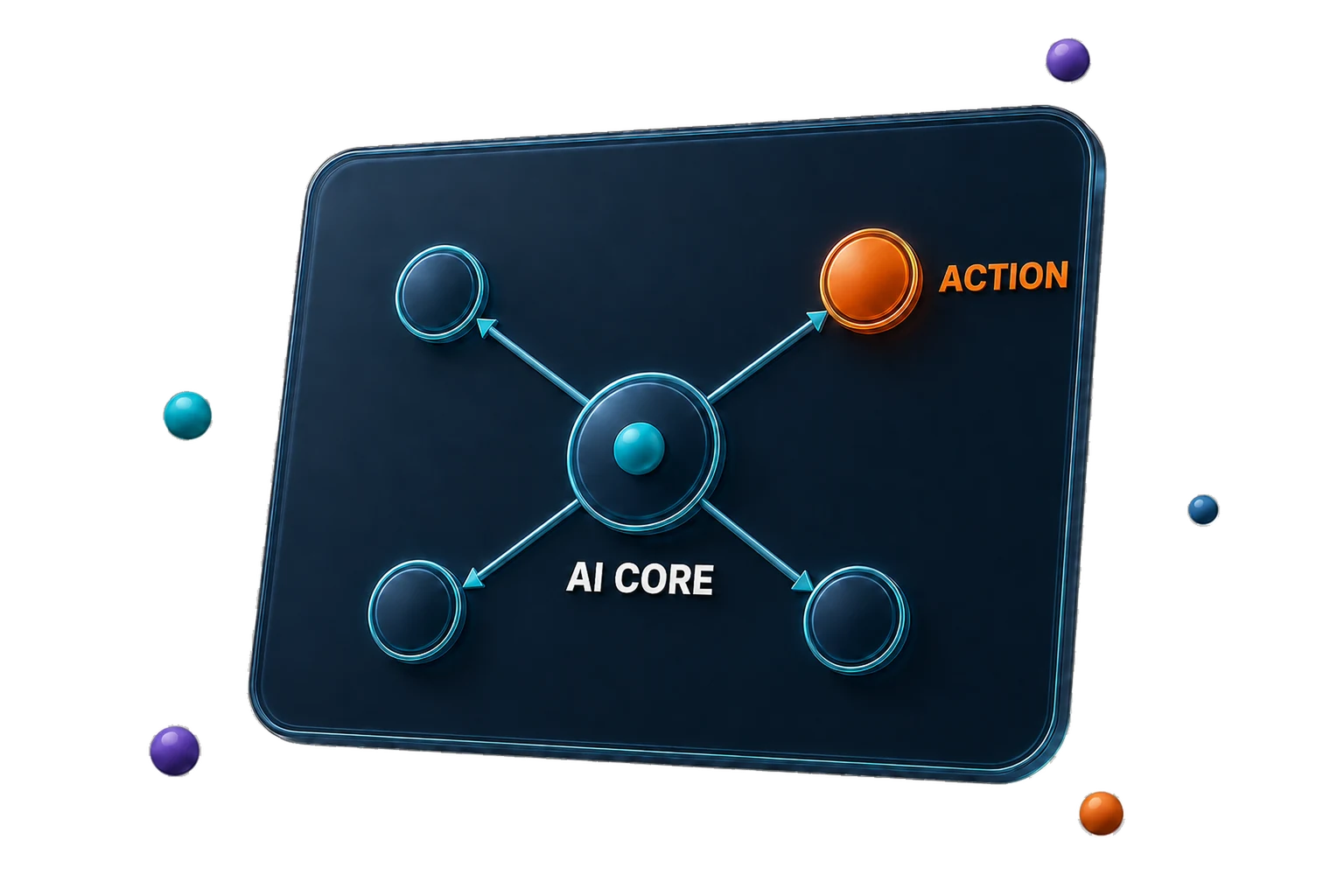
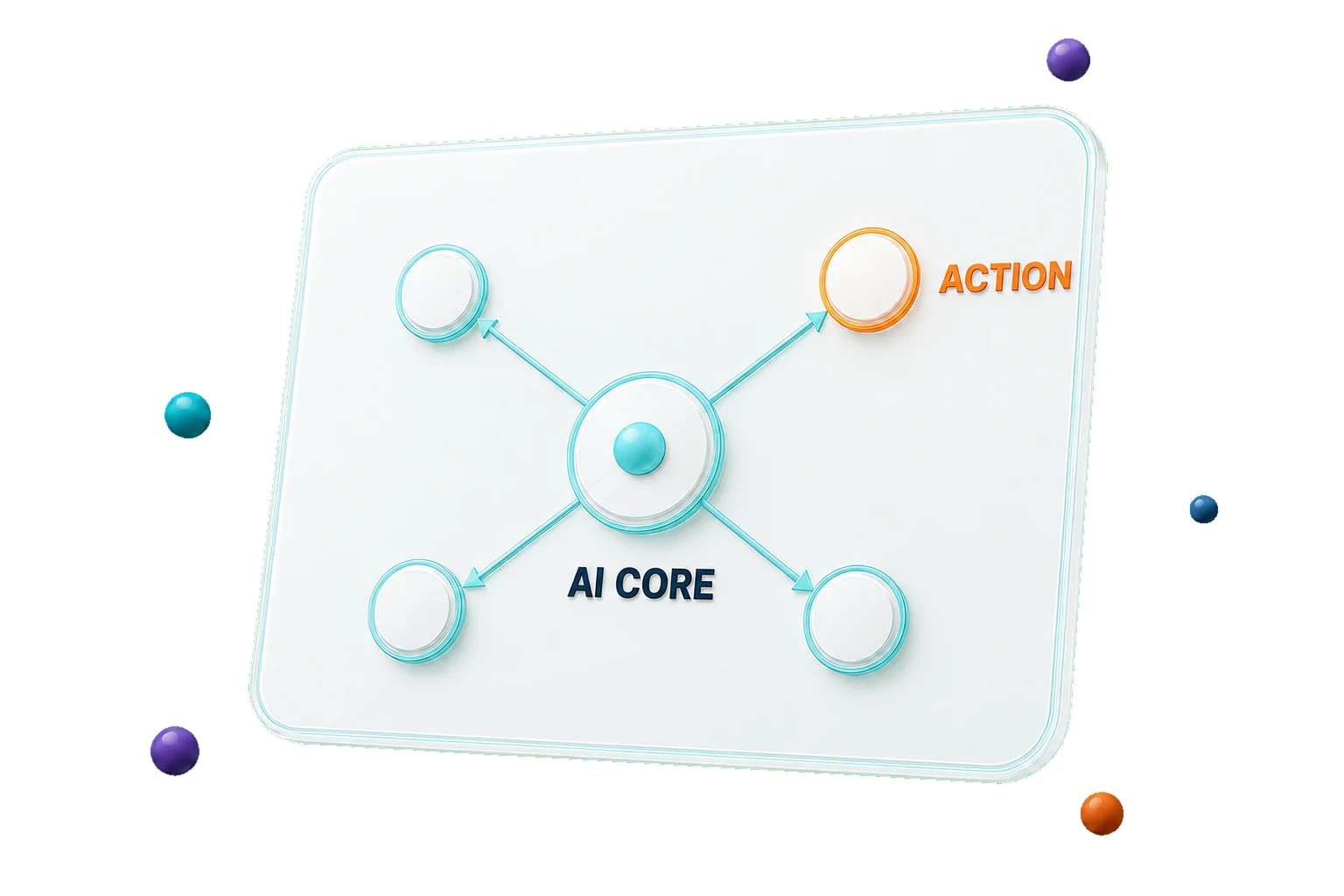
Every 2026 industry survey shows the same split: everyone is piloting agents, almost nobody is running them in production long enough for it to matter. Teams ship a demo, then discover the gap between "the model works" and "we trust it enough to remove the human check" is where most agentic AI budgets quietly die.
of enterprise applications will embed task-specific AI agents by the end of 2026, up from under 5% in 2025 — Gartner, 2025
of agentic AI projects are forecast to be cancelled by 2027, mostly from unclear ROI and weak governance — Gartner, 2025
of organizations have actually scaled agentic AI, despite roughly two-thirds already experimenting — McKinsey, State of AI 2025
A knowledge base exists. Nobody outside the team can find anything in it fast enough — and every new hire spends their first month just learning where things live.
It answers questions correctly and then tells the customer to "contact support" — because nobody gave it a way to actually resolve the problem.
The model performs. But there's no owner, no eval harness, no rollback plan — so every output still gets manually reviewed, which quietly cancels the automation you paid for.
The process is well understood and completely manual. Nobody's proposing to automate it because it "isn't technical enough" to be a real project — until someone adds up the hours.
Customers call. They don't want to download an app or type into a widget — but building a voice agent that doesn't feel like a phone tree is a different engineering problem than chat.
LangGraph or CrewAI got chosen because it was the name everyone was talking about — the actual process it needed to fit got scoped afterward, if at all.
RAG-based assistants that answer from your actual documentation. Scoped to the material it's trained on — it says "I don't have that" instead of guessing.
Task-specific agents that take action, not just answer — with multi-agent orchestration for workflows too complex for a single agent to own.
Voice agents for phone-based workflows, and browser agents that operate interfaces the way a person would when no API exists.
Workflow automation with AI decision points where judgment is actually needed. We simplify the process first, so the automation doesn't just speed up the same broken steps.
Internal tools your team already uses, upgraded with AI only where it removes real manual work — never added just to say the product has AI in it.
We map the process as it actually runs today, including the manual workarounds nobody put in the documentation. This is the point where most agentic projects survive or fail before a single line of code exists. Output: mapped workflow, scoped decision points.
What the agent decides alone, what it escalates, and what tools and data it can touch — these boundaries get decided on paper, in a design review, before any code exists. Output: agent design doc, escalation rules.
The agent gets tested against defined cases and known failure modes before it reaches real users. Output: working agent, eval coverage.
Controlled rollout with a visible owner. Either handed to your team with documentation, or continued under Scale & Evolve for ongoing monitoring and retraining. Output: deployed agent, handoff package or Scale & Evolve continuation.
 Professional Services
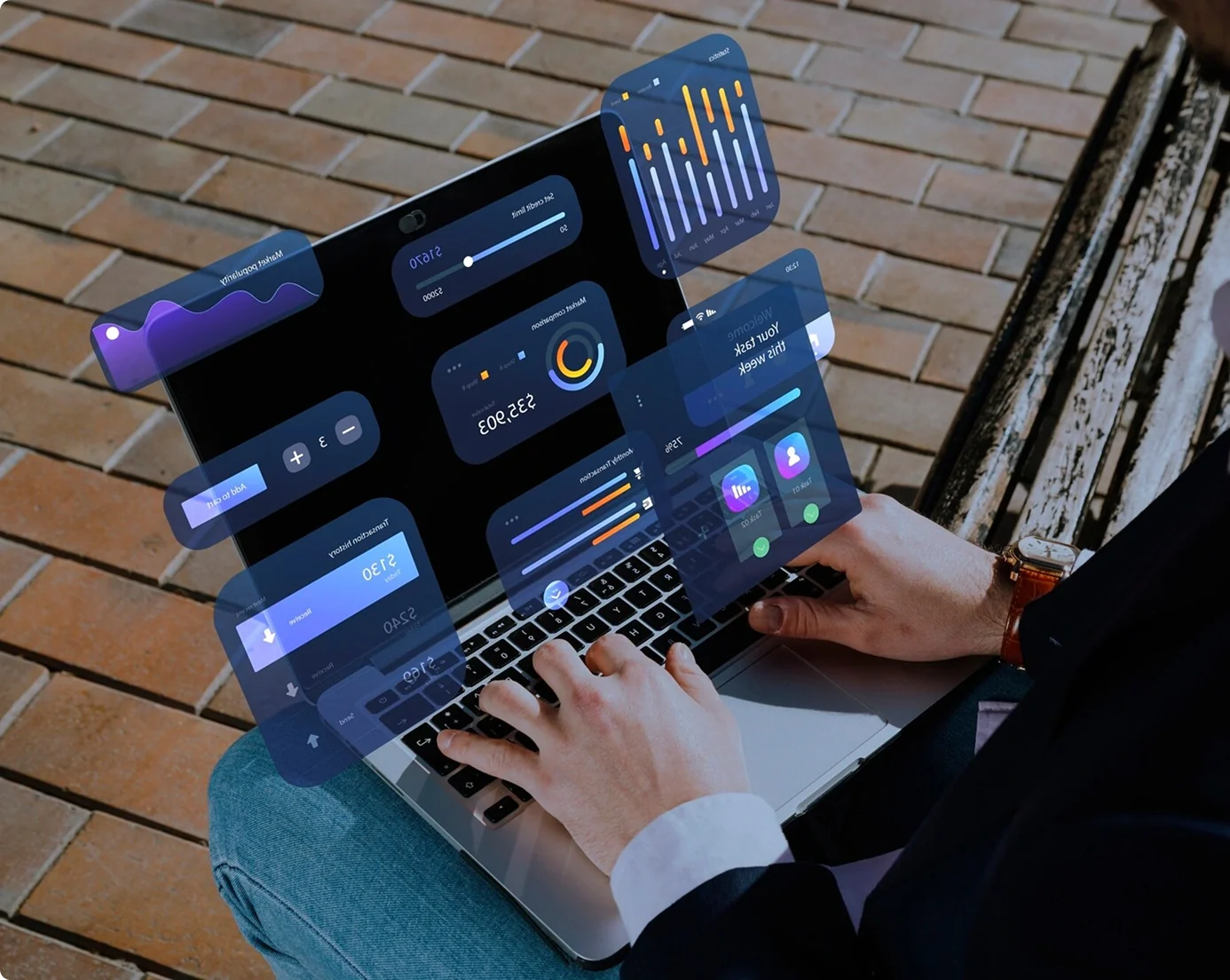
 Built a multi-agent AI system that reduced tender preparation from days to minutes — achieving a 4× increase in bid submission volume, near-100% compliance accuracy, and redirecting 70% of staff time from document administration to strategic analysis.
Read case study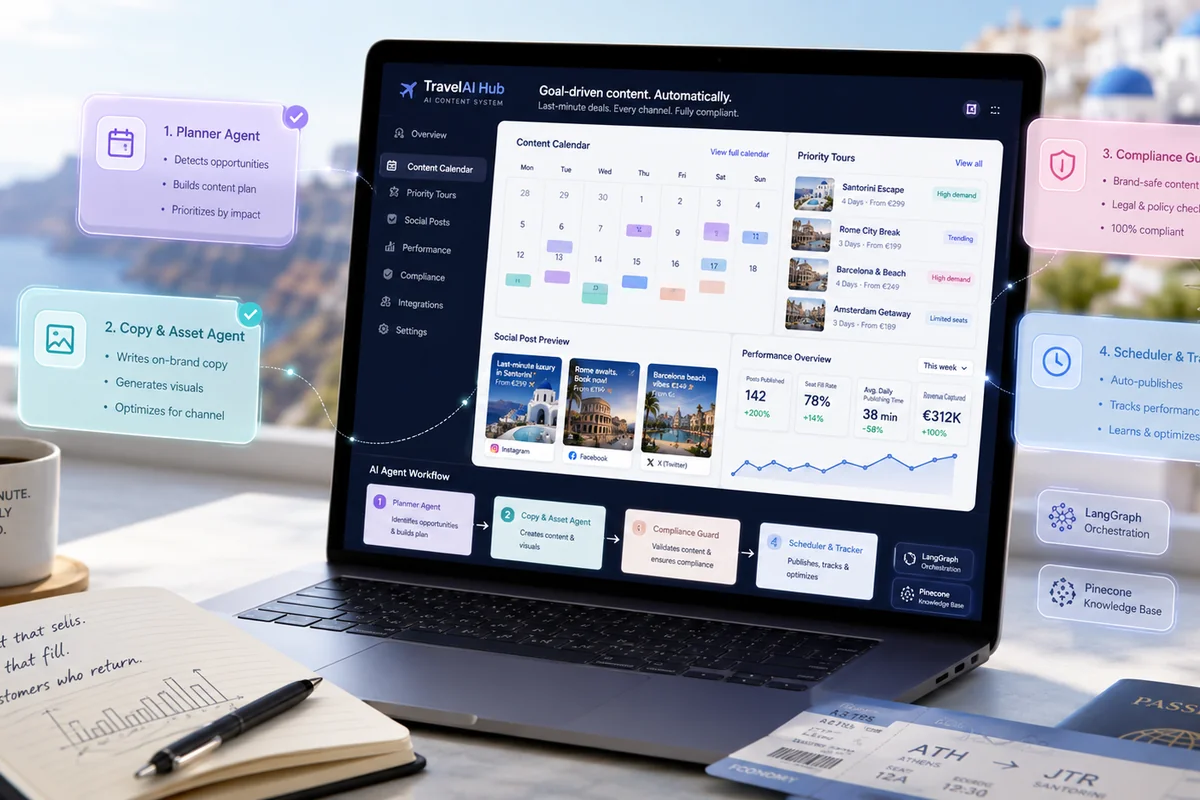 Travel & Hospitality
 Built a goal-driven multi-agent AI content system for a European travel agency that tripled daily posting output, captured 100% of time-sensitive revenue opportunities overnight, and cut daily publishing work by 58% — all while maintaining brand compliance on every post.
Read case study Energy
 Built a multi-agent RAG system serving as an always-available domain expert for technical teams in hydrogen and renewable energy — reducing information retrieval from hours to seconds and eliminating hallucinations through rigorous RAG architecture.
Read case studyBoth. It works standalone when the problem is a specific assistant, agent, or automation. It also runs as a concurrent workstream inside a Build engagement when the product needs agentic features alongside the rest of the build.
Depends on the workflow. LangGraph, CrewAI, and AutoGen for multi-agent orchestration, MCP for tool access, VAPI or ElevenLabs for voice, n8n or Make.com for workflow-level automation. We're tool-agnostic — the framework follows the requirement, not the other way round.
Scoped tool permissions, explicit escalation rules, and an evaluation harness built before rollout. Every agent has a defined boundary for what it can do autonomously and a named human owner for what it can't.
Depends on the architecture we scope with you. Some engagements keep everything inside your infrastructure; others use third-party LLM APIs under contractual data-handling terms. This is a scoping-call decision, not a default we apply without discussing it.
(Pricing not yet confirmed — indicative range only.) Early-stage figures suggest a range in the low tens of thousands of dollars for a well-scoped single agent or automation, with larger multi-agent or platform-level work running higher.
Typically within two to three weeks of signing, starting with a workflow audit before any build commitment.
Book a 30-minute technical call. Bring the workflow you want automated or the chatbot that can't act — we'll tell you honestly whether it's actually agent-shaped.