DATA & INTEGRATIONS

Data pipelines and integrations that hold under real conditions.

AI products fail on data before they fail on models. We build the pipelines, vector stores, and integrations your system depends on — designed to survive schema drift and upstream failures at production scale.

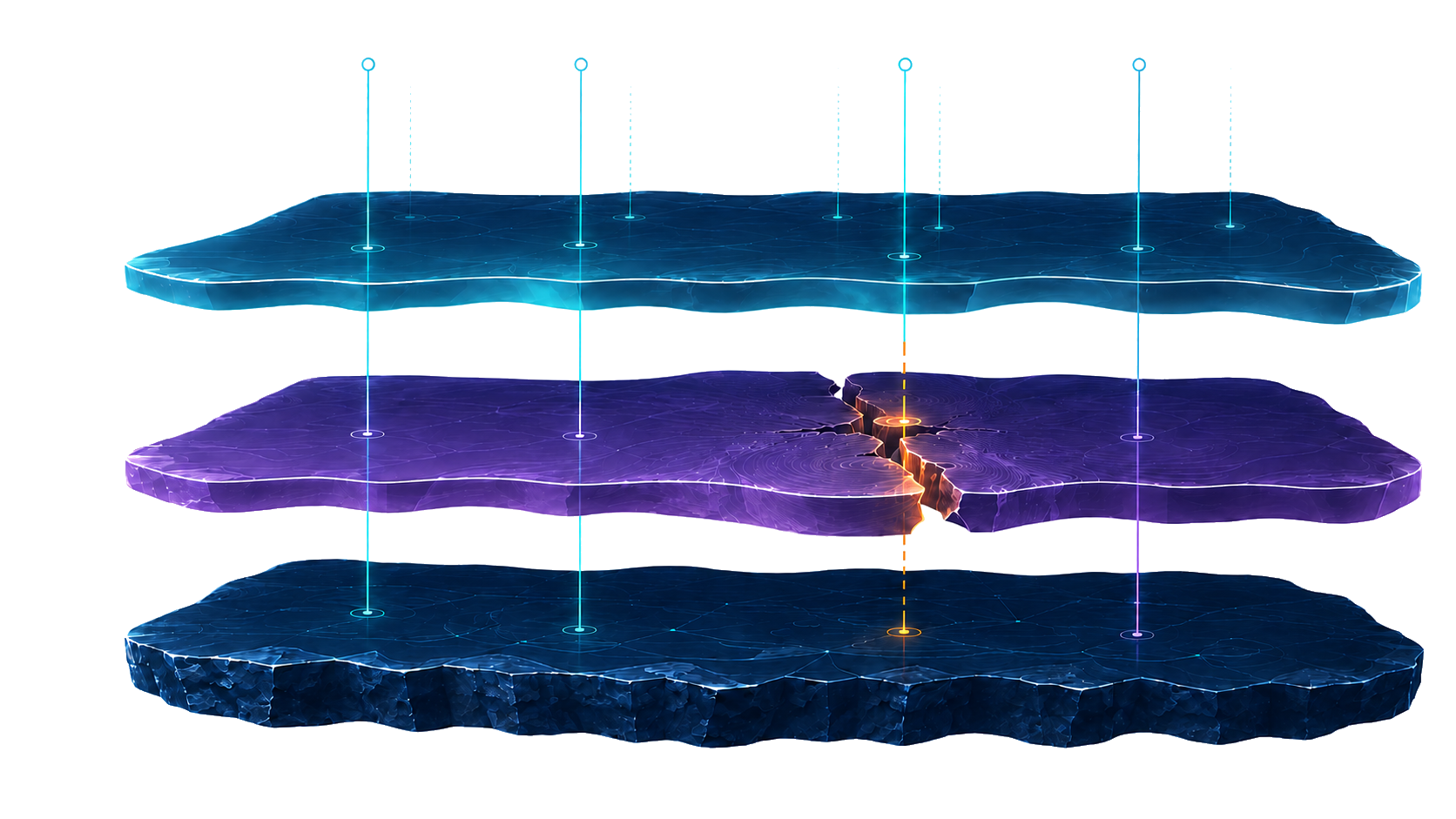
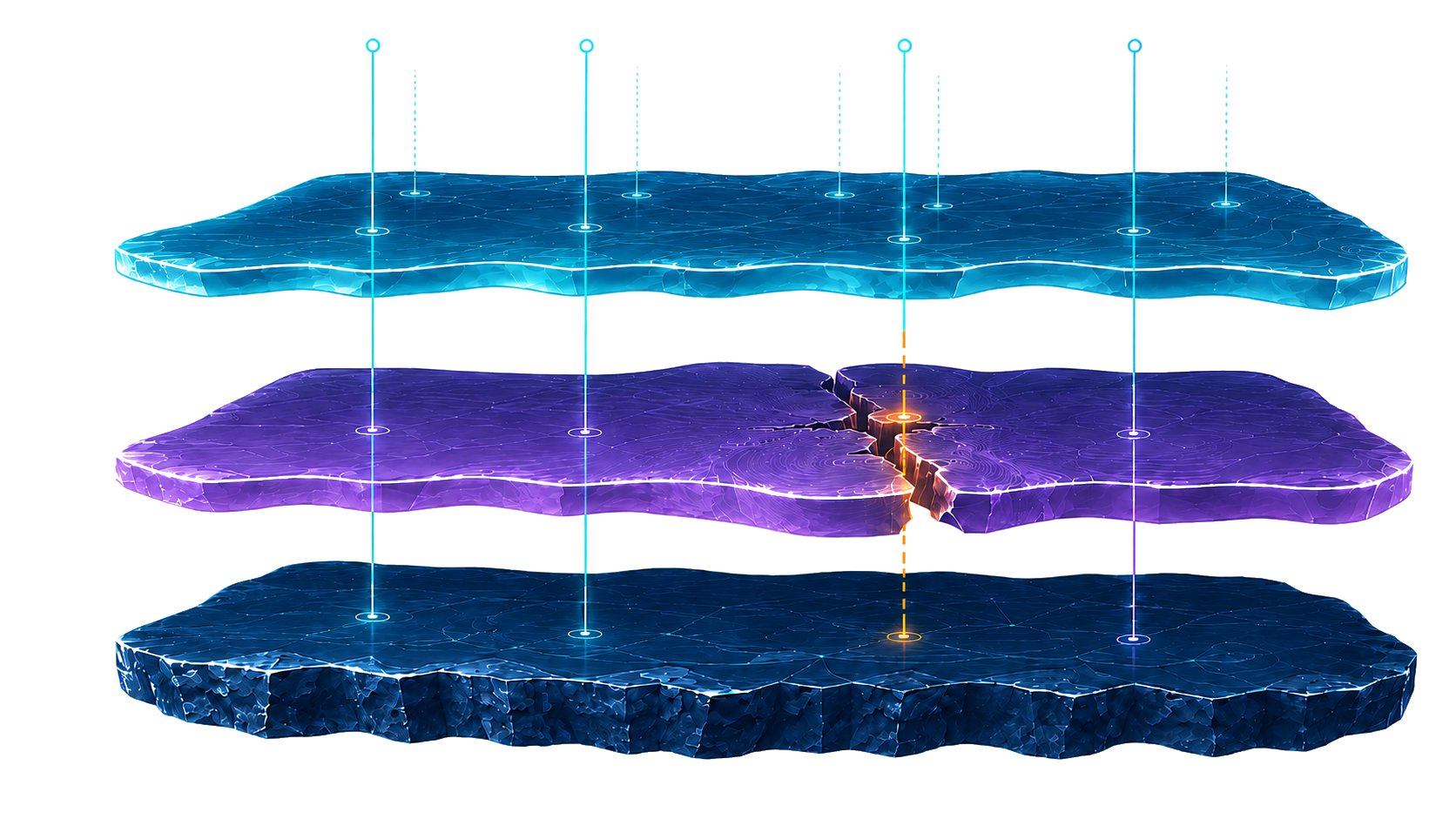
SERVED TRANSFORMED RAW
Why data infrastructure matters now

Bad data is why most AI projects fail. Not bad models.

The pattern repeats across industries: a team builds an AI feature that performs well in evaluation, hands it to the data team to "just connect it to production," and watches adoption stall. The model was fine. The data feeding it was not — inconsistent schemas, stale batch cycles, missing integration coverage, no quality controls.

Data engineering is the part of AI product development that is systematically underscoped and understaffed. Teams that get it right treat the data infrastructure as a first-class engineering problem — not a prerequisite someone else will handle.

60% of AI projects will be abandoned before production if unsupported by AI-ready data infrastructure — Gartner, 2025
43% of enterprises cite data quality as their top obstacle to AI success, up from 19% a year earlier — Informatica CDO Insights, 2025
>40% of data engineering time is spent on pipeline maintenance rather than new features — VentureBeat / industry surveys, 2025

When data infrastructure is the right call.

Your pilot worked. Production data looks nothing like it.

Curated snapshots powered the demo. Live data arrives schema-drifted, late, and inconsistently formatted — and the model degrades within weeks while the data team gets blamed for assumptions the model team made.

Your fraud or risk decisions run on data that's already stale.

Transactions scored hours after they happen, a recommendation engine serving yesterday's signals — the AI feature shipped, but the pipeline behind it was never built for the latency the decision actually needs.

Every new integration adds a schema nobody owns.

Five upstream sources, five schemas, no canonical model the team trusts — just a growing list of one-off fixes whenever a provider changes their API.

You find out a pipeline broke from a Slack message, not a monitor.

Schema changes that pass validation but corrupt downstream aggregates, late-arriving events that look like missing data — invisible until someone notices the numbers are off.

Your model behaves strangely and nobody can say why.

Features computed from data that's technically present but operationally wrong, training pipelines mixing production with staging data — invisible until the model's behavior is.

Nobody can tell you if the data is fresh until a user complains.

SLAs measured on pipeline run success, not data freshness. No alerting on drift, schema anomalies, or row-count drops — the dashboard just looks wrong one day.

What we build

Six categories of data work.

Most engagements involve more than one. The scoping call is the fastest way to identify what the real problem is and what category of work will fix it.

PIPELINES

Data pipeline engineering

Ingestion, transformation, and delivery pipelines built to handle schema drift, late-arriving data, and upstream failures without manual intervention. Designed with observability and data quality checks as first-class requirements.
KafkaApache AirflowSparkdbtFlink
AI / ML

AI data infrastructure

Feature stores, vector databases, and embedding pipelines for RAG and retrieval — the data foundations that make LLM and ML applications behave predictably in production, not just in notebooks.

PineconeWeaviateFeastLanceDB
INTEGRATIONS

Third-party integrations

Bi-directional syncs, webhook architectures, and API integrations with CRMs, ERPs, payment processors, and healthcare data systems. Built to survive upstream API changes and designed for auditability.

REST / GraphQLHL7 FHIRFivetranAirbyteWebhooks
ANALYTICS

Analytics engineering

Data warehouse modelling, dbt transformation layers, and BI-layer design. Analytics your business teams can trust and your engineers can maintain — with lineage, testing, and documentation built in.

SnowflakeBigQueryRedshiftdbtMetabase
MODEL DEVELOPMENT

Predictive and generative model development

Classification models that sort unstructured data into taxonomies, predictive models that forecast outcomes from historical patterns, and generative models for synthesis tasks beyond standard pre-trained capabilities. We evaluate, fine-tune, or build from scratch depending on what the use case actually needs.

Hugging FacePyTorchscikit-learnModel benchmarking
MLOPS

ML model operations and governance

Deployment pipelines, drift and performance monitoring, and automated retraining for models running in production. Version history and governance documentation so a model change is reviewable, not a black box.

MLflowWeights & BiasesEvidently AIModel registries
How it works

Four stages. No big-bang migrations.

Data audit

We map your current sources, pipeline architecture, and reliability problems. You leave with a clear picture of what is causing the issues — and which to fix first.

Architecture design

We define the target architecture: streaming vs batch tradeoffs, transformation layers, data quality controls, and integration boundaries. Scoped to what you actually need.

Build incrementally

We build and migrate in layers — no big-bang migrations. Each layer is observable and stable before the next is added. Your product keeps running throughout.

Handoff with documentation

Runbooks, data dictionaries, lineage diagrams, and alerting configuration your team can maintain without us. You own it from day one.

Featured case — E-COMMERCE · DATA ENGINEERING · DTA-2025-007

Batch pipeline replaced with real-time streaming — billions of events, seconds of latency

ActiDash's clients were making business decisions on data that was 4–24 hours old. Sales, marketing, and consumer behavior data arrived on batch schedules — by the time it surfaced in dashboards, the moment to act had passed. We rebuilt the ingestion and processing layer on a fault-tolerant Kafka streaming architecture with 100+ servers. Analytics dashboards now refresh on sub-minute cycles. Delivered ahead of schedule, no scope reduction, full integration with existing on-premises infrastructure.

Stack: Kafka · ClickHouse · Angular · AWS

100+ Kafka streaming servers
<60s Dashboard refresh latency
0 Scope reductions
Questions

Common questions

Is Data & Integrations a standalone engagement or part of a Build?

Both. It works as a standalone engagement when the specific problem is pipelines, integrations, or AI data readiness — scoped and delivered independently. It also frequently runs as a concurrent workstream within a Build engagement when the product build has data dependencies that need senior attention in parallel.

What if we only need one integration, not a full pipeline redesign?

Single-integration scopes are a good fit. We assess what already exists, build the integration to a standard that will not create future maintenance debt, and hand it off. The scoping call is the fastest way to understand what the real scope is — sometimes what looks like one integration has architectural implications that are worth understanding before building.

What data tools and frameworks do you work with?

The stack depends on your requirements. We work with Kafka and Flink for streaming, Apache Airflow for orchestration, dbt for transformations, and Snowflake / BigQuery / Redshift for warehousing. For AI infrastructure: Pinecone, Weaviate, LanceDB for vector storage, MLflow for experiment tracking, Feast for feature stores. We are tool-agnostic — we recommend based on your latency requirements, budget, and team, not on what we prefer to work with.

How do you handle GDPR, HIPAA, or other compliance requirements in data pipelines?

Compliance requirements are scoped in from the start — not retrofitted after. PHI boundary enforcement, data retention controls, audit logs for data movement, and de-identification pipelines are treated as architectural requirements, not afterthoughts. We have built HIPAA-aware data infrastructure for healthcare clients and PCI-DSS-compliant pipelines for fintech. Final compliance sign-off is with your legal team; we build the architecture that makes it possible.

Can you work with our existing Snowflake / BigQuery / Redshift setup?

Yes. We routinely work within existing warehouse infrastructure. The engagement typically involves assessing what already exists, identifying where the reliability or quality problems are, and building or rebuilding the parts that are causing issues — without requiring you to replace infrastructure that is working.

What is the minimum engagement size?

Data engagements typically start from $25K for a well-scoped single-workstream problem — an integration, a pipeline rebuild, or an AI data readiness audit with implementation. Larger platform-level data work runs $75K–$200K. The scoping call gives us enough to outline an honest range before you commit to anything.

How do you migrate from batch to streaming without downtime?

Incrementally. We run the new streaming pipeline alongside the existing batch system, validate output parity, then shift consumers one by one. No big-bang cutover. The existing system stays live until the new one has demonstrated reliability at production load. We have done this on platforms with millions of daily events where any interruption had commercial consequences.

How quickly can a data engagement start?

Typically within two to three weeks of signing. We begin with a half-day technical discovery session, deliver an architecture and scope proposal within five business days, and start build work once the proposal is agreed. Urgent timelines are sometimes possible — mention it on the call.

Ready to fix the data layer?

Book a 30-minute technical call. Bring your pipeline problem, your integration backlog, or your AI feature that stalled on data quality. We will tell you what we think in the first 20 minutes.

Press Esc to close