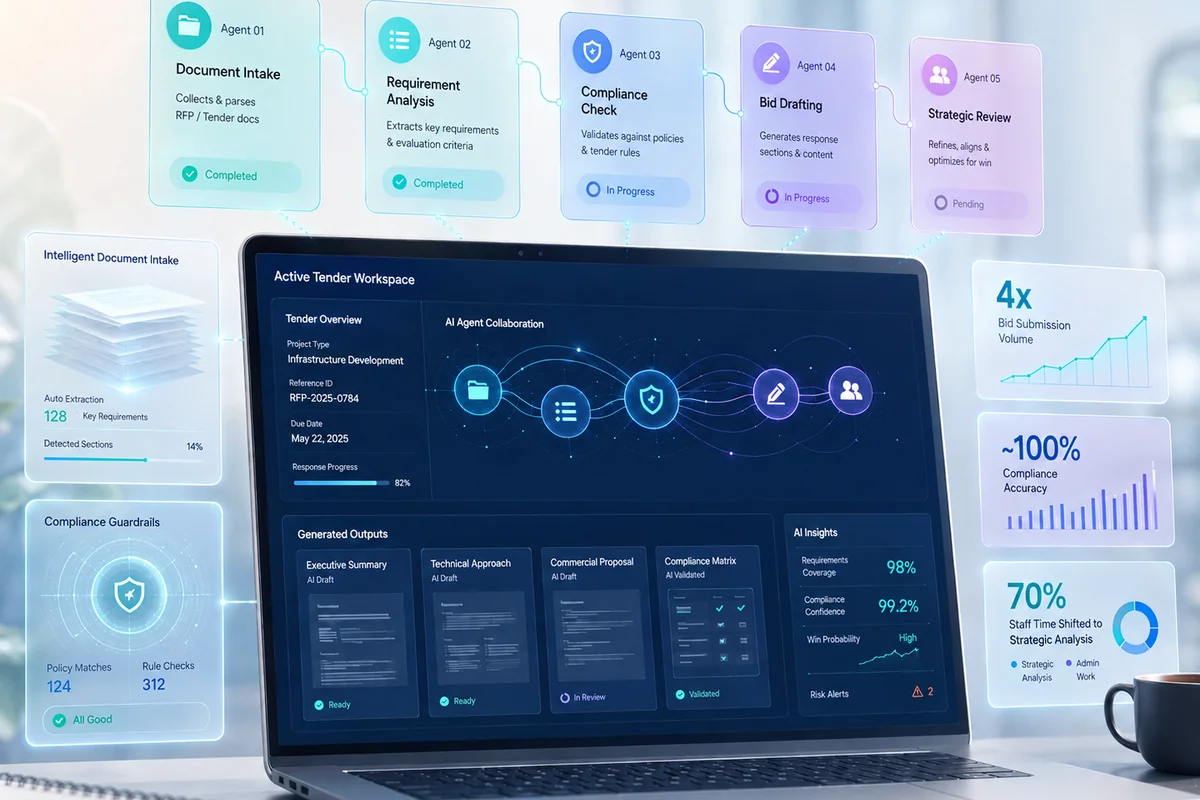
A growth-stage lending platform needed an ML-based underwriting model with full auditability — every decision traceable, replayable, and explainable to their compliance team. We built the inference architecture, the eval harness, and the shadow rollout. The system is now serving 11,000 underwriting decisions per day with a full audit trail.
Engineering for systems where getting it wrong shows up in a regulatory filing.
Your fraud model has to explain its decisions to compliance. Your payments infrastructure needs to survive new volume and new providers. Your AI features won't go live until legal has a full audit trail. In regulated fintech, the engineering consequences aren't just technical — they show up in audits, investor reviews, and regulatory filings.
Compliance note
We are an engineering firm, not a compliance consultancy. We build systems that are designed to be compliant — with full audit trails, explainable decision paths, and human-in-the-loop controls where required. Final compliance sign-off is with your legal and risk teams.
The engineering problems we see most in fintech.
These are not hypothetical. They come from audits and engagements with funded fintech companies across payments, lending, and compliance-adjacent SaaS.
Fraud and risk systems that do not scale
Rules-based fraud engines hit diminishing returns at scale — false positives erode customer trust while missed patterns escalate losses. ML-based models drift and need continuous revalidation. When risk scoring has to run in milliseconds and explain its decisions to compliance, the engineering has to handle both sides.
Payments infrastructure held together with duct tape
Integrations built for one provider that now need to support four. Settlement logic that was never designed for current volume. The cost of getting this wrong is not just technical.
Compliance automation that creates more toil than it removes
Reporting pipelines that require manual review. Audit logs that are technically present but practically useless. AML and KYC workflows that slow onboarding without proportionate risk reduction.
AI features that legal will not approve without evidence
LLM-assisted underwriting, document classification, anomaly detection — valuable, but they need explainability, audit trails, and human-in-the-loop design before going near production.
Data infrastructure not built for real-time
Batch pipelines that make risk decisions stale. Event sourcing that was added later and never fully replaced the batch layer. Analytics that cannot answer what the current exposure is.
Platform too fragile to onboard new clients on
Multi-tenancy that was added as an afterthought. Configuration management that is a spreadsheet. Infrastructure that works until a new enterprise client asks about SLAs.
Building a new fintech product on a regulated foundation
New fintech products often trade architecture quality for speed-to-market — and spend the next two years patching the data model, audit trail, and compliance design they skipped. The right foundation costs less to build once than to retrofit under a compliance deadline.
Solutions that require subject matter experts
Some engagements span industry verticals and technical challenges together. Explore the full solutions map to find the right match.
More about solutions →What comparable engagements delivered.
A payments platform processing €40M annual volume was running on a fragile PHP monolith that blocked compliance certification and investor due diligence. We replaced it with an event-driven microservices architecture — achieving PCI-DSS Level 1 certification, cutting transaction latency by 68%, and clearing the technical blocker that enabled the client's Series C close.
A customs broker platform was processing declarations manually — hours of work per shipment, with compliance risk at every step. We built automated declaration processing across four UK and EU customs systems, reducing each declaration from hours to under 90 seconds with 99.9% platform uptime and full audit trail.
What we build for fintech teams.
These are the categories of fintech systems we build and modernize most often. If yours is not on the list, a 30-minute call is the fastest way to find out whether we are the right fit.
- Underwriting and risk-scoring platforms
- Fraud detection pipelines (rules + ML hybrid)
- Payments processing and settlement systems
- KYC/AML workflow automation
- Real-time data and event-streaming infrastructure
- Compliance reporting and audit trail systems
- AI-assisted document review with human-in-the-loop
- Multi-tenant platform architecture
- Neobank and digital banking platform development
A payments platform modernized without stopping the business.
FinTech PHP Monolith to Microservices: Payment Platform Modernization
Replaced a fragile PHP monolith handling €40M annual payment volume with an event-driven microservices architecture — achieving PCI-DSS Level 1 compliance and unblocking a €12M Series C.
Read case studyWhat clients say about working with us.
Working on a fintech system that matters?
Book a 30-minute technical call. We will ask about your stack, your constraints, and what getting this right means for your business.
Book a 30-min technical callAn experienced engineer replies within one business day, often faster.