AI integration engineering
Retrieval pipelines, structured outputs, prompt versioning, and LLM behavior monitoring for production. The demo worked — we make sure the next sprint doesn't break it silently.
Experienced engineering,
Named engineers from week one, accountable for the full stack — not a rotating pool of juniors or a tech lead you rarely see. Scoped to what needs to ship, not to how many hours you'll approve.
Retrieval pipelines, structured outputs, prompt versioning, and LLM behavior monitoring for production. The demo worked — we make sure the next sprint doesn't break it silently.
RESTful and GraphQL APIs, third-party integrations, and event-driven architectures. We design for the downstream consumers and the teams who will maintain the integration, not just the immediate caller.
End-to-end feature delivery across frontend, backend, and data layers. One engineer owns the domain — frontend, backend, data — without handoffs between a discovery team and a delivery team.
Database query analysis, caching strategy, and request latency reduction. We diagnose root causes, not symptoms, and fix them in a way that holds under load — not just under the current traffic pattern.
Incremental refactoring alongside feature delivery. We scope the risk, prioritise by business impact, and make measurable progress without stopping the product or creating a six-month freeze.
Experienced engineers take four to six months to hire. When a board deadline, a fundraise, or a critical integration is inside that window, you need capacity now — not after a recruiting cycle.
You're at an inflection point — a new integration, a scaling problem, a platform migration. The decision will be lived with for years. It needs someone who has made it before, not someone learning on your production system.
Your LLM feature worked in the demo and in staging. Production is different — traffic patterns, edge cases, behavior drift, silent regressions. You need engineers who understand the gap, not ones who hand it back to the ML team.
Velocity is falling and every new feature touches old code. The team knows what's wrong but can't stop to fix it without dropping active delivery. That's not a discipline problem — it's an architecture problem.
You need engineers who self-direct — who surface blockers early, flag risk without being asked, and communicate directly with the technical stakeholders, not through a PM translating requirements.
Audit trails, access control, data residency, and compliance constraints aren't retrofit work — they're architectural decisions made in week one. You can't afford engineers who learn this after they've shipped.
We map the problem domain, the existing codebase constraints, the integration points, and the risk surface before writing a line of code. Decisions made here determine whether the engagement delivers or drifts.
Output: scoped plan, risk flags, defined acceptance criteria
A senior engineer is assigned to your domain. They run it — architecture decisions, code reviews, async communication with your team — without an account manager translating between you. The engineer you meet in the scoping call is the engineer doing the work.
Output: named engineer active, first working increment in your repository
Structured releases on a cadence you can plan around. No black-box periods. You see the work, raise concerns early, and the engineer responds directly — not through a PM's interpretation of your feedback.
Output: shipped increments, documented decisions, live feedback loop
At close, you receive an architecture decision log, a maintained test suite, integration runbooks, and a dependency map your team can operate without us. If the engagement continues, it runs under the same engineer with the same context — no re-onboarding, no knowledge loss.
Output: architecture log, runbooks, test suite — or ongoing engagement under existing context
Every significant technical choice documented — what was evaluated, what was ruled out, and the reasoning. Reviewable by your team, not just the engineer who made the call.
Shipped to your repository, peer-reviewed, with test coverage scoped to what actually matters in production — not coverage numbers built around implementation details.
Step-by-step operational documentation for every system your internal engineers will need to operate, extend, or debug after the engagement closes.
What is coupled to what, where the known failure modes are, what to monitor in production, and what decisions were deferred and why.
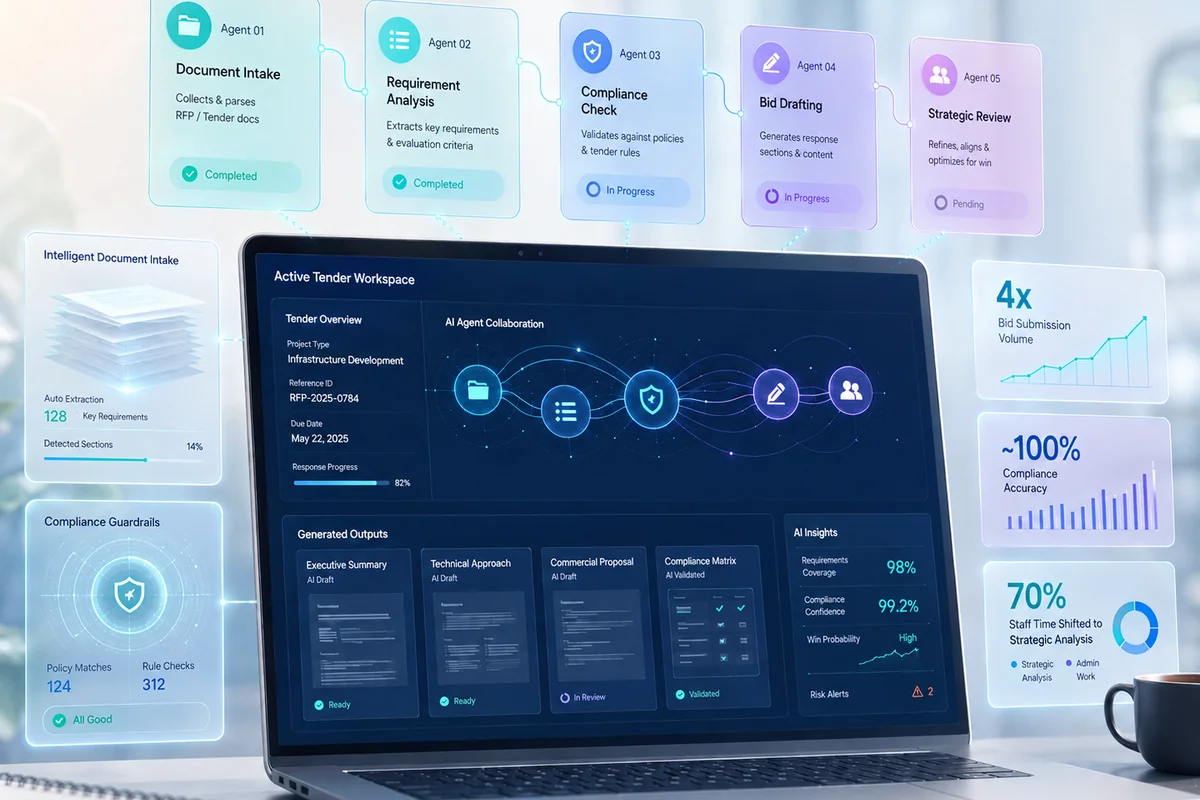 FinTech
 Replaced a fragile PHP monolith handling €40M annual payment volume with an event-driven microservices architecture — achieving PCI-DSS Level 1 compliance and unblocking a €12M Series C.
Read case study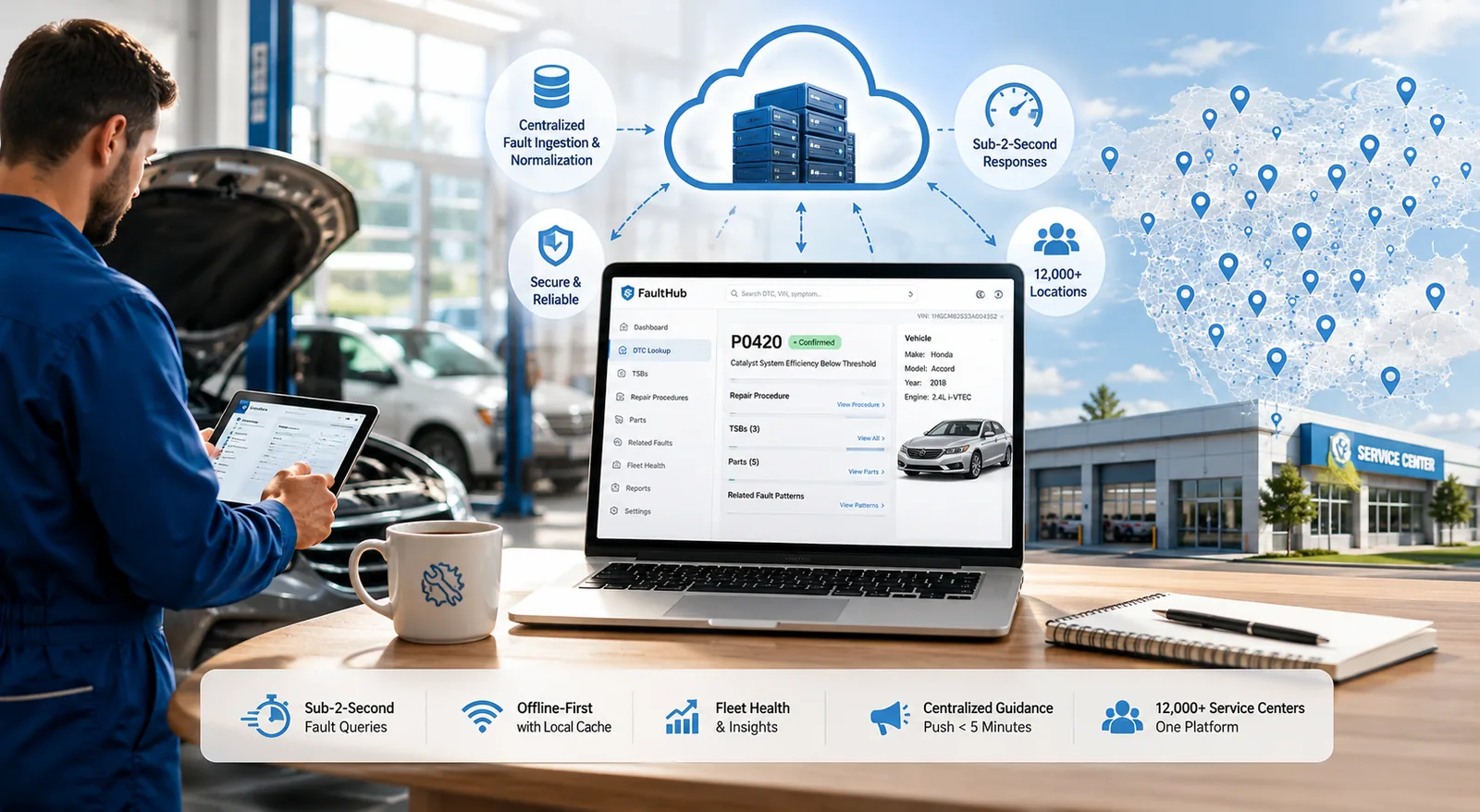 Automotive
 Built a centralized server-side diagnostics platform for an automotive service network spanning 12,000+ locations — replacing fragmented per-center tooling with a unified fault ingestion layer, normalized fault-code database, and real-time workshop interface.
Read case study IoT & Industrial Tech
 Engineered a lightweight, cloud-agnostic IoT platform for MirrorIOT that supports high-throughput sensor data ingestion, multi-tenant device management, and secure OTA firmware updates — eliminating cloud vendor lock-in and enabling deployment across cloud and on-premises environments.
Read case studyNeither framing quite fits. We take a specific domain — a feature area, an integration, a system that needs rebuilding — and run it end to end: scoping, architecture, implementation, and release. Your team keeps control of priorities and decisions that affect the rest of the product; we don't insert a layer of process between you and the work.
The architecture decision log, runbooks, and integration maps described in "What you get" exist for exactly this reason — they're written as we go, not reconstructed after the fact. If continuity is interrupted, the documentation is built to make the transition possible without starting from zero.
Yes, and it's most of what "technical debt resolution" actually is. The first stage is scoping — we read the code, find the constraints nobody wrote down, and flag what's risky before committing to a delivery plan. We don't promise velocity on unfamiliar code without that step.
Engagements are scoped around what needs to ship, not tracked hourly. The exact structure — a fixed-scope build, an ongoing monthly capacity arrangement, or a hybrid — depends on whether the work is a defined deliverable or continuous engineering capacity. This gets defined during scoping, before any commitment.
Inside your stack. A new framework or tool only gets introduced if it solves a specific problem your current setup can't, and that gets flagged and discussed before it happens — not decided unilaterally mid-engagement.
That's the normal case for AI features, not an edge case. Before we touch the code, we define what "working" means for that feature — acceptable ranges, known failure modes, what a regression looks like. Testing and monitoring get built against that definition, not against a single expected output.
Book a call and we'll review your system context, team setup, and the specific challenge — then outline what an engagement would look like and whether the fit makes sense.